Who Can Skydive? Age, Weight, Health and Fitness Requirements
Skydiving FAQs

Key Takeaways
Most healthy adults can skydive if they meet the applicable requirements. At Piedmont Skydiving, tandem participants must be at least 18 years old, present a valid government-issued photo ID, weigh under 225 pounds, and be proportionate in height and weight. There is no upper age limit. You’ll also need enough mobility to board the aircraft, maintain the required body position during freefall, and lift your legs for landing. Certain medical conditions, including heart problems, epilepsy, and back or neck injuries, may require medical clearance or make participation unsuitable. If you have a concern about your eligibility, contact our team before booking so we can help you understand your options.

Have you ever dreamed of jumping out of an airplane, only to wonder whether your age, weight, or health might keep you from doing it? You’re not alone! Questions about eligibility are among the most common concerns first-time skydivers have, and getting clear answers is the best place to start.
The good news is that skydiving is an experience many adults can enjoy, including older adults and people with certain physical disabilities. However, every jump has requirements designed around the equipment, the tandem instructor, the specific dropzone you’re jumping at and the physical demands of the experience.
At Piedmont Skydiving, we want you to understand those requirements before you book. Here’s what to know about age, weight, height, medical conditions, fitness, and other factors that can affect your eligibility for a tandem skydive.
Who Can Skydive
Adults who meet the age and weight requirements, can fit properly in a tandem harness, and are physically able to participate may be eligible to skydive. Your medical history and any conditions that could affect your ability to respond to instructions or tolerate the physical demands of a jump also matter.
Tandem skydiving pairs you with a trained instructor who manages the technical aspects of the jump. You don’t need previous skydiving experience, exceptional athletic ability, or a particular body type. You do, however, need to meet the requirements of the dropzone and its equipment.
At Piedmont Skydiving, the main considerations are:
- Age: You must be at least 18 years old (with a valid, government-issued photo ID).
- Weight: You must weigh under 225 pounds; subject to our height-weight proportionality requirements.
- Physical ability: You must be able to participate in the necessary movements, including lifting your legs for landing.
- Health: You must be in relatively good health; certain medical conditions may require a physician’s evaluation before you jump.
Let’s look at each requirement in more detail.
Age Requirements

How old do you have to be to skydive?
You must be at least 18 years old to tandem skydive at Piedmont Skydiving. Bring a valid, government-issued photo ID so our team can verify your age when you arrive. Parental consent does not override the minimum age requirement. Even if a parent or guardian gives permission, someone under 18 cannot participate in a standard tandem skydive at our dropzone.
Is there an upper age limit for skydiving?
There is no maximum age limit at Piedmont Skydiving. A healthy 70-year-old, 80-year-old, or older adult may be able to skydive if they meet the physical and medical requirements. Age alone doesn’t determine eligibility; mobility, cardiovascular health, and the ability to follow instructions are more relevant.
If you’re an older adult considering a jump, think about how comfortably you can climb stairs, move your legs, and squat/get into a seated position. If you have concerns about your heart, joints, balance, or medications, discuss them with your physician before booking.
Weight and Size Requirements
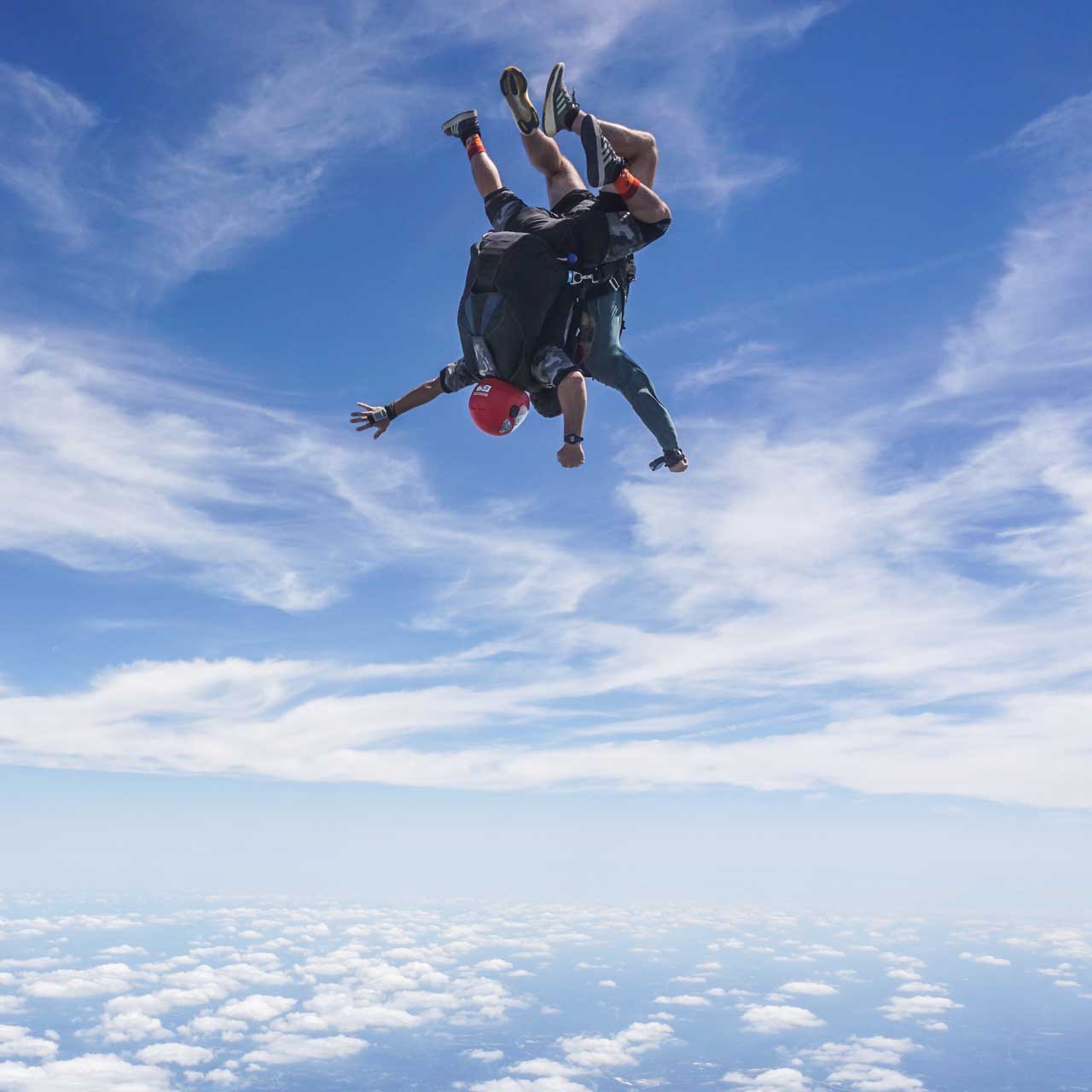
What is the tandem skydiving weight limit?
Piedmont Skydiving’s maximum tandem skydiving weight is 225 pounds. Weight limits include the practical requirements of the equipment, the tandem instructor, and the passenger’s ability to participate in the jump.
These limits aren’t arbitrary judgments about someone’s body. Tandem parachute systems and harnesses have manufacturer specifications, and instructors need to be able to work effectively with their passengers throughout the jump and landing.
If you’re close to the limit, remember to account for your clothing and shoes when considering your weight. If you’re above the posted limit, contact our team before making a reservation. We can explain the current requirements and whether any options are available for your circumstances.
What does “height-weight proportionate” mean?
Height-weight proportionality means your height and body build must allow the tandem harness to fit correctly and securely. Two people who weigh the same amount may have different body proportions. Those differences can affect how a harness fits around the thighs, hips, and torso.
Proper fit is essential because the harness connects you to your instructor throughout the jump. Proportionality is not a single body shape or a specific body mass index (BMI) score. Our team considers whether the equipment can be fitted appropriately and whether the jump can be conducted within the relevant requirements.
Is there a height limit for skydiving?
Piedmont Skydiving does not use a single universal height cutoff to determine eligibility. Height is considered alongside weight, body proportions, and harness fit. If you’re particularly tall or short, or you’re unsure whether your proportions meet the requirements, contact us before booking. We can discuss your circumstances rather than leave you guessing.
Fitness and Mobility Requirements
You don’t need to be an athlete to go tandem skydiving, but you do need enough mobility and physical control to participate in a few important parts of the experience.
Consider whether you can:
- Board the aircraft: You need to get into the plane and take your assigned position, with assistance where the operation permits.
- Maintain the required body position: During freefall, your instructor will guide you into the appropriate position. You need to be able to cooperate with the positioning instructions to the extent required.
- Lift your legs for landing: You may need to raise your legs and hold them up as you come in to land.
- Follow instructions: You must be able to understand and respond to your instructor’s directions.
You don’t need exceptional strength, perfect flexibility, or outstanding endurance. However, certain injuries, mobility limitations, or conditions affecting coordination and awareness may require additional consideration.
If a disability, injury, or mobility limitation makes any of these movements difficult, discuss your needs with our team before booking. We’ll explain which abilities are necessary and whether an accommodation may be possible.

Skydiving Health Requirements
Skydiving places physical demands on your body, and certain medical conditions may affect your ability to participate. Heart health, breathing, mobility, and conditions that affect awareness or coordination are particularly relevant.
Having a medical diagnosis doesn’t automatically mean you can’t skydive. What matters is the nature of the condition, how well it’s managed, and whether it could create additional risks during freefall or landing. Depending on your medical history, your physician may need to assess whether your condition is compatible with the activity.
Heart conditions and high blood pressure
Skydiving can trigger a surge of adrenaline, temporarily increasing your heart rate and blood pressure. The physical forces associated with parachute deployment and landing are also relevant.
If you have coronary artery disease, a history of heart attack, heart failure, an abnormal heart rhythm, or poorly controlled high blood pressure, discuss skydiving with your physician first. They may need to consider whether: your condition is stable, exertion or sudden stress could trigger symptoms, and your medications affect your ability to participate.
Back, neck, and spine injuries
Your back and neck play an important role in maintaining the required body position during freefall. The harness, parachute opening, and landing can also place forces on your body.
A history of back pain doesn’t automatically prevent you from skydiving. However, spinal instability, significant neck injuries, herniated discs, recent fractures, or spinal surgery may affect your eligibility. Your physician can help determine whether your condition and range of motion are compatible with the activity.
Diabetes
People with diabetes may be able to skydive. Blood glucose stability is a key consideration, particularly for people who use insulin or medications that can cause hypoglycemia. Your healthcare provider can help you assess the risk of low blood sugar during the experience, while complications affecting vision, sensation, or cardiovascular health may require additional consideration.
Asthma and respiratory conditions
Can you skydive with asthma? People with well-controlled asthma may be able to participate, but the ability to breathe comfortably throughout the experience is important. Cold air, exertion, and stress can trigger symptoms in some people.
If your asthma is severe, uncontrolled, or recently exacerbated, speak with your physician first. The same consideration applies to COPD and other respiratory conditions.
Epilepsy and seizure disorders
A seizure during a skydive could affect your awareness, movement, and ability to respond to instructions. If you have epilepsy or another seizure disorder, discuss the specific risks with your neurologist before making plans. Recent seizures, episodes involving loss of awareness, and medication changes may all be relevant to the assessment.
Recent surgery
Even when you feel well enough to resume everyday activities, your body may not yet be ready for the forces associated with parachute deployment, harness pressure, or landing.
If you’ve recently had surgery, ask your surgeon whether your incision and repaired tissues have healed sufficiently for these demands. Procedures involving the heart, abdomen, joints, or spine may require particular consideration.
Pregnancy
Piedmont Skydiving does not permit tandem skydiving during pregnancy. The forces associated with the activity and the possibility of impact make it unsuitable during this time. If you’re expecting, you can plan your jump for after pregnancy and recovery, when you’re medically ready to participate.
Skydiving With a Physical Disability
Having a physical disability doesn’t automatically mean you cannot skydive. Many people with disabilities are able to experience a tandem jump, depending on their individual mobility, medical needs, and the accommodations available.
Tandem skydiving means an instructor manages the technical aspects of the jump, but participants still have to meet certain physical requirements. The ability to maintain the necessary body position, tolerate the harness, and participate in landing is particularly important.
For example, a person with limited mobility in one arm may have different needs from someone with a spinal cord injury or a condition affecting their legs. The details matter more than the diagnosis alone.
If you have a disability, contact Piedmont Skydiving before booking to discuss your situation and determine whether an appropriate arrangement may be possible.
Who Should Not Skydive?
You should postpone booking or seek further guidance if any of the following applies:
- You don’t meet the eligibility requirements.
- You’re recovering from an injury or operation.
- You’re temporarily unwell.
- You have a medical concern that hasn’t been evaluated.
We want you to experience the thrill of skydiving just as much as you want to experience it yourself. But we also have a responsibility to be honest about when a jump can or cannot go ahead.
How Risky Is Skydiving?
Skydiving involves inherent risk, including the possibility of serious injury or death. Understanding those risks is an important part of deciding whether to participate.
The United States Parachute Association (USPA) tracks skydiving activity, accidents, and fatalities across the country. According to the USPA’s 2025 skydiving safety report, 16 jumps out of an estimated 3.47 million ended in a fatality last year. That’s a rate of 0.46 deaths per 100,000 jumps, or 1 in approximately 217,000 jumps.
These numbers include different types of skydiving; they should not be interpreted as a tandem-specific rate or a guarantee about an individual jump.
Frequently Asked Questions

Can a 70-year-old skydive?
Yes. There’s no upper age limit for skydiving. A 70-year-old may be eligible if they meet the weight and mobility requirements and are medically able to participate. The oldest tandem skydiver currently on record was almost 107 years old during his most recent jump!
Can a 300 lb person skydive?
Weight limits vary between dropzones, depending on their equipment, harness specifications, and operating requirements. The average maximum weight limit found in the U.S. is 250 to 260 lbs. This is because tandem systems most frequently accommodate a 500 lb maximum – which includes the instructor, the student, and the gear itself.
Do they weigh you before you skydive?
You should expect your weight to be checked or verified as part of the eligibility process. Clothing and shoes should be included when assessing your weight, and height-weight proportionality also matters.
Can I skydive with a cold or sinus congestion?
It’s best to postpone your jump if you have significant nasal or sinus congestion. Changes in pressure during a skydive can cause discomfort or pain when your ears and sinuses cannot equalize properly.
Can you skydive on your period?
Menstruation alone generally doesn’t prevent someone from skydiving. Assess how you’re feeling on the day, particularly if you experience severe cramps, dizziness, weakness, or heavy bleeding. If your symptoms affect your ability to participate, consider rescheduling.
Can you drink alcohol before skydiving?
No. Don’t drink alcohol before your skydive. Alcohol can impair judgment, coordination, reaction time, and your ability to follow instructions. Arrive sober and alert, and avoid any other substance that could affect your ability to participate.
Ready to Skydive?
If you’re at least 18, meet Piedmont Skydiving’s weight and proportionality requirements, and can manage the necessary movements, book your tandem skydive today!
And if you’re planning a gift for someone who meets the requirements, check out our skydiving gift certificates.
Still have questions about your age, weight, health, or mobility? Reach out to Piedmont Skydiving before booking. Our team can help clarify the requirements, discuss your concerns, and explain the next steps. Your adventure starts with a question. Let’s find your answer!
Blue skies!
You May Be Interested In:
Can You Skydive in the Winter? When We Jump and How to Dress for the Cold
2 days ago by Piedmont Skydiving

How Fast Do You Fall When Skydiving?
5 months ago by Piedmont Skydiving

Am I Too Heavy to Skydive? Skydiving Weight Limits Explained
9 months ago by Piedmont Skydiving

Skydiving Gear Guide: Parachutes, Helmets, Goggles, and More
1 year ago by Piedmont Skydiving
Ready to unleash your inner wild child?
There’s nothing on this planet more exhilarating than skydiving. Experience the freedom of human flight!
